Yes. The web3 fashion stack gets clearer when it is treated as a sequence of distinct surfaces, each carrying a specific kind of data, each with a specific kind of machine, and each with a specific kind of trace.

It begins with the design substrate. This is where patterns, garment blocks, weave structures, grading logic, material recipes, simulation presets, and digital garment states exist as data. In a web3 fashion setting, this substrate can live fully in the commons. A designer works on a pattern file, changes seam geometry, adjusts proportion, compiles a knit structure, saves a new state. That state can be released openly as CC0. The important thing here is that the design state is legible, runnable, and forkable. It is not locked inside a platform. It is a file, a graph of files, or a parameter set that other people and other machines can actually use.
The next surface is the anchoring surface. A designer takes a selected state and computes a digest. That digest is signed. If the design object is large, its pieces can be grouped into a Merkle structure and reduced to a single root. This is where provenance becomes exact without dragging the entire process into permanent exposure. What gets anchored is a chosen state. The rest of the workbench can stay local, temporary, or simply disappear. This keeps signatures precise. They mark points. They do not turn the whole practice into a continuous transcript.

Then comes the local engineering surface. This is where the designer's machine room matters. Pattern editor, geometry engine, cloth simulation, grading logic, slicing tools, firmware compilers, local model inference, local storage. This is the part that separates an actual web3 fashion workflow from a moodboard attached to a token. The designer can open a file, modify it, simulate it, compile it, and send it into a cutter, loom, knitting machine, embroidery rig, or printer they can inspect and tune themselves. Open source hardware matters here because the machine is part of the design language. Feed rates, tension routines, servo timing, stitch control, motor behavior, sensor thresholds, calibration curves. These are not background details. They shape the garment directly. When the hardware is open, the designer can alter the process itself rather than accept a sealed workflow from someone else's cloud.
That leads into the fabrication surface. The pattern state becomes machine instructions. A cut path becomes motion. A weave plan becomes thread crossings. A knit map becomes row logic. The garment takes form through local execution. During this phase, the designer may choose to compute a compact production reference: pattern digest, material batch reference, firmware version, machine profile, and final object scan. These can be grouped and reduced into a single reference for that garment or garment run. The resulting piece can itself live openly. The garment as object, image, scan, and source state can all remain in the commons. What distinguishes one piece is not enclosure around its form, but the fact that this instance passed through this material process.
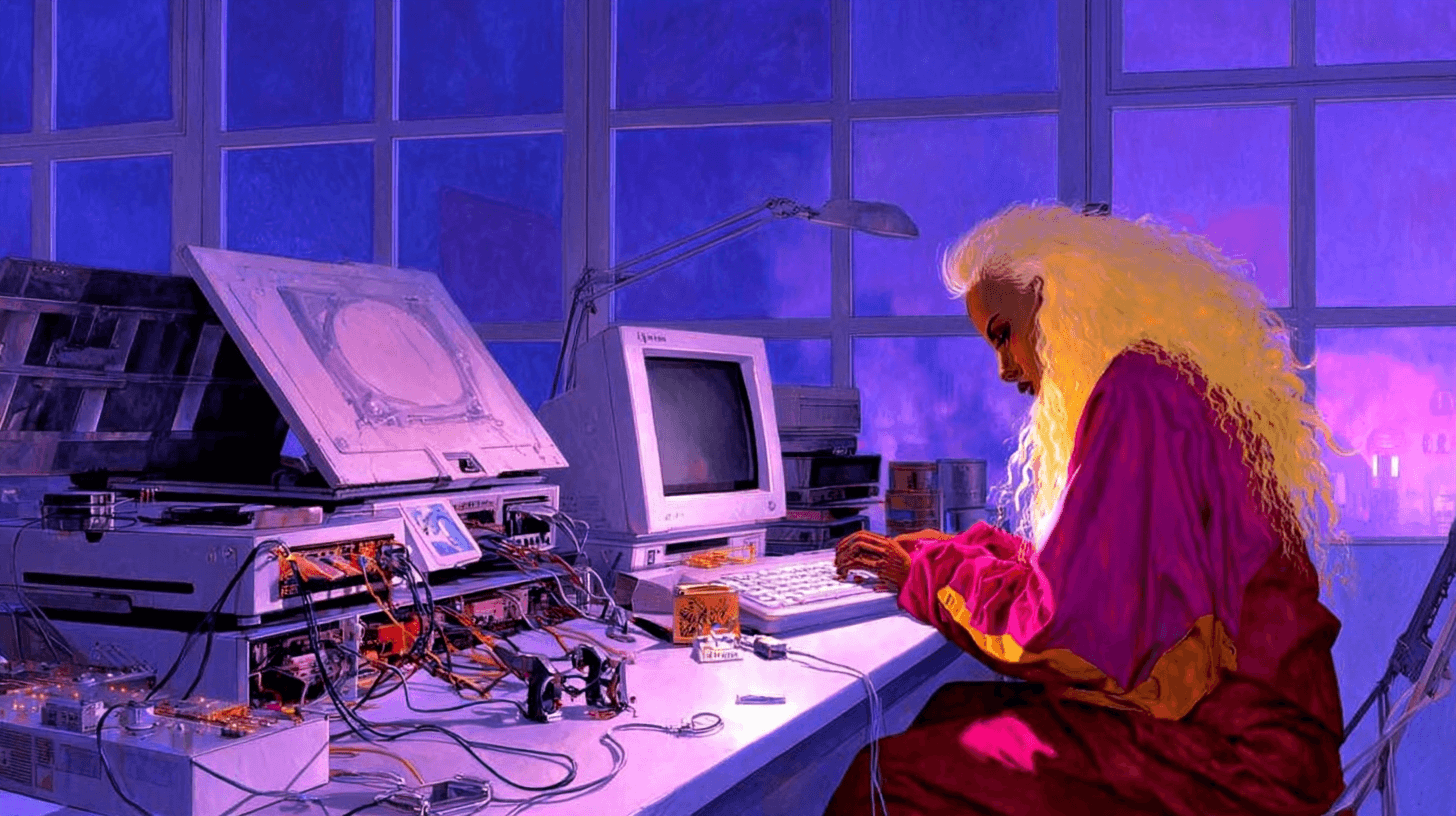
Parallel to all of that sits the confidential interaction surface. This is where web3 fashion stops being aesthetic language and starts becoming serious engineering. Buyer measurements, shipping details, private commissions, body notes, payment metadata, direct messages, repair requests, fitting records, custom adjustment logic. None of this belongs in the commons. None of it belongs in an indexable public graph. None of it belongs in broad plaintext storage. This is where confidential computing matters.
Confidential computing means the designer can receive sensitive input and process it inside a narrowly bounded execution environment. The important detail is not just encryption at rest or in transit. The important detail is that plaintext exposure stays confined to the smallest possible runtime surface. Buyer measurements can enter a fitting tool, produce an adjusted pattern, and leave a result, without turning the underlying private data into a reusable public resource. That makes the private layer a real layer instead of a promise. In engineering terms, the designer wants encrypted transport, encrypted storage, and a narrow computation boundary, ideally running either locally or inside a measured environment whose code path is known and minimal.

From there comes the proof surface. This is how interaction continues without broad disclosure. A buyer may need to show that they purchased a garment from a particular run. A collector may need to enter a private channel linked to a piece. A wearer may need access to a repair, upgrade, or future release path. A proof can show that a condition holds without opening the full underlying record. That gives the garment and its linked data a way to travel through later interactions without dragging full identity, full transaction history, or full relationship history into view every time.
Then there is the storefront surface. A decentralized storefront is not just a product grid hosted on a blockchain. It is a publishing and exchange surface where the designer can present open garment states, open pattern states, object references, prices, availability, proofs of past production, and encrypted channels for direct buyer interaction. The key thing is that the storefront is not the owner of the relationship. It is a rendering layer over data the designer already holds by key. Listings can point to open files. Purchase conditions can settle to the designer's address directly. Buyer messages can route through encrypted channels. Access to later interactions can be checked by proofs instead of platform accounts. The storefront becomes replaceable. The designer remains continuous.

That ties directly to the self-sovereign surface. In engineering terms, self-sovereignty here means the designer holds the keys, runs or chooses the nodes, stores or pins the files they care about, and can continue their practice without needing one marketplace, one payment processor, one social platform, one cloud inference vendor, or one fashion platform to remain alive. Their identity is a set of keys, not a rented profile. Their work is addressable by hashes and signatures, not buried inside a proprietary database. Their buyer relationships move through encrypted paths they can keep using across interfaces. Their machine stack is inspectable. Their publishing path is portable. Their sales path is direct. Their proof layer is reusable. Their practice remains intact even if one front-end disappears.
Under all of this is the network surface. Nodes store, propagate, verify, and maintain shared references. A designer can run a node in a storage network, a proof network, a settlement network, or a coordination network. Staking matters here when it is tied to actual network work: storing state, validating updates, maintaining availability, participating in routing, supporting shared infrastructure. In a serious web3 fashion stack, staking is not decorative finance. It is part of keeping the substrate and its references alive. The designer is not just publishing into the network. She is participating in the network's persistence.

Put together, the engineering flow looks like this.
She develops a pattern state locally. She computes a digest and signs that state. She releases the file openly into the commons. She compiles the state into machine instructions on open hardware. She fabricates a garment and computes a compact production reference. She publishes the garment, its images, and its reference through a storefront surface she can replace without losing continuity. A buyer interacts directly through encrypted channels. Sensitive data is processed inside a narrow computation boundary to generate a private sizing or customization result. The resulting private pattern instance stays inside that interaction domain. The buyer receives the garment and a proof-linked relation to it. Later access, resale, repair, membership, and future interactions travel through proofs and signatures rather than account silos.
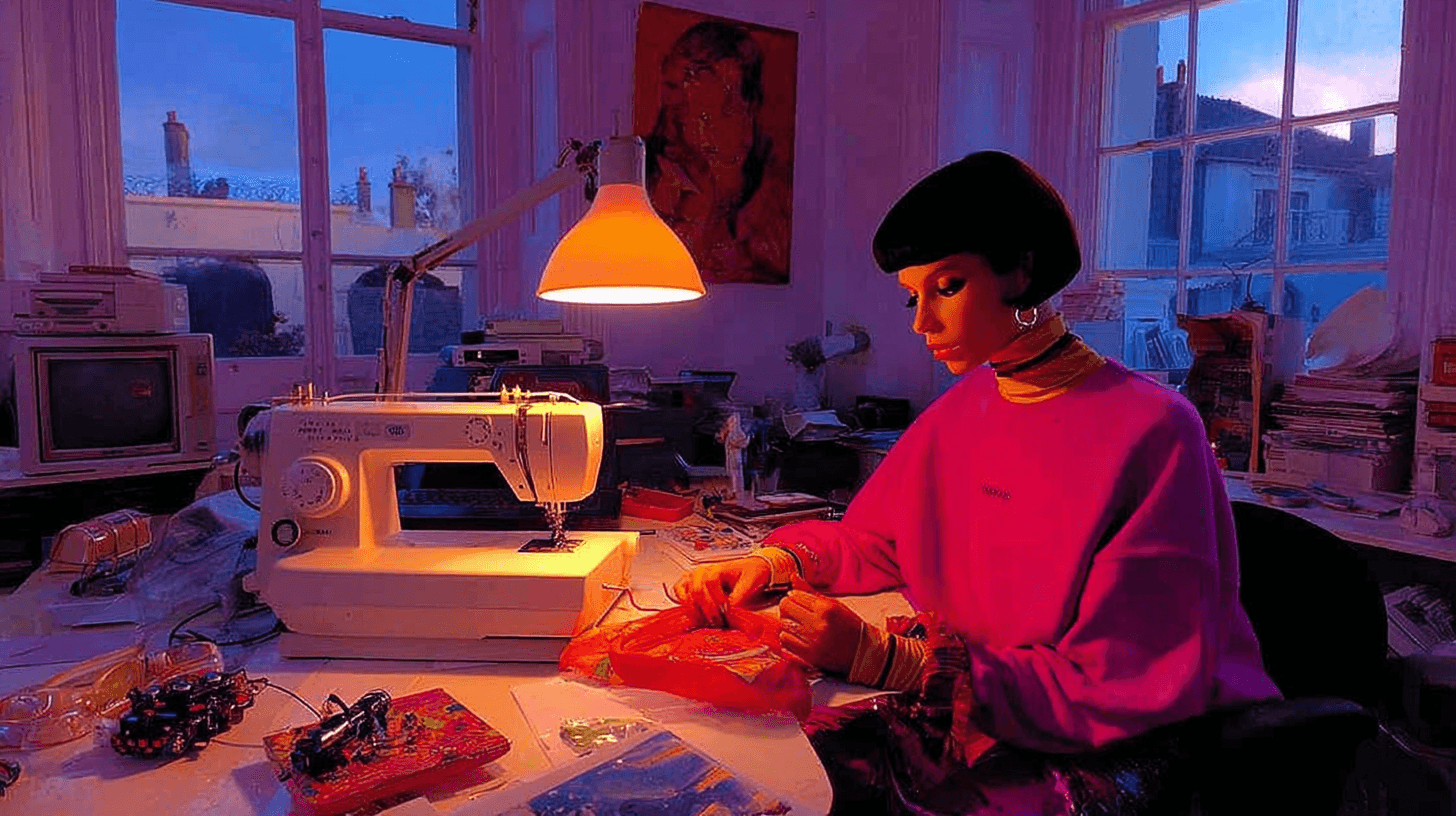
That is the full stack in practical terms: an open design commons, sparse signed anchors, local compute, open hardware fabrication, confidential buyer computation, proof-based later interaction, portable storefronts, key-held identity, and network participation that keeps the whole thing live.
What about the shortest clean version of that full stack? Open pattern substrate, signed state anchors, local machine execution, confidential buyer compute, proof-linked garments, portable storefronts, self-held keys, and node-backed network persistence.